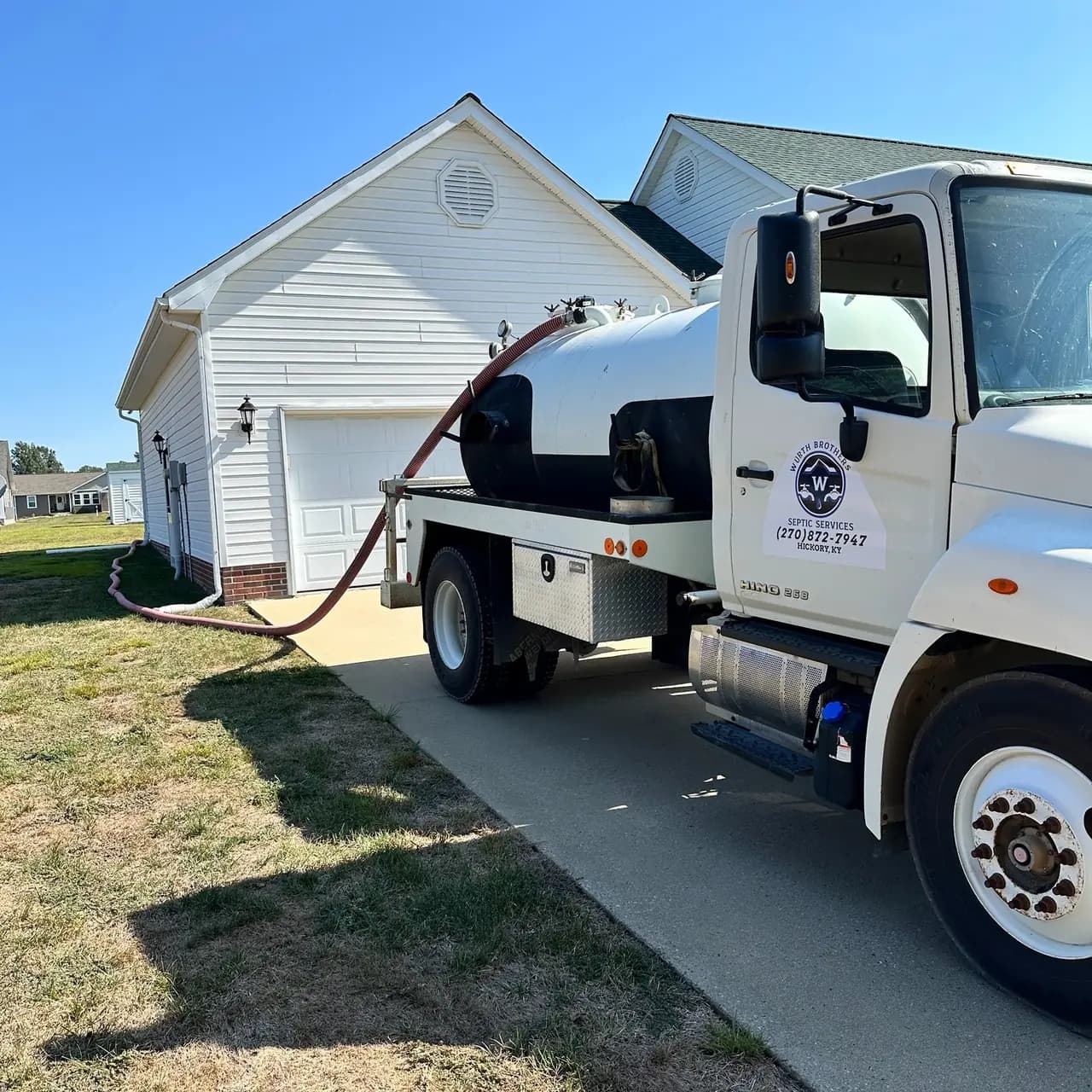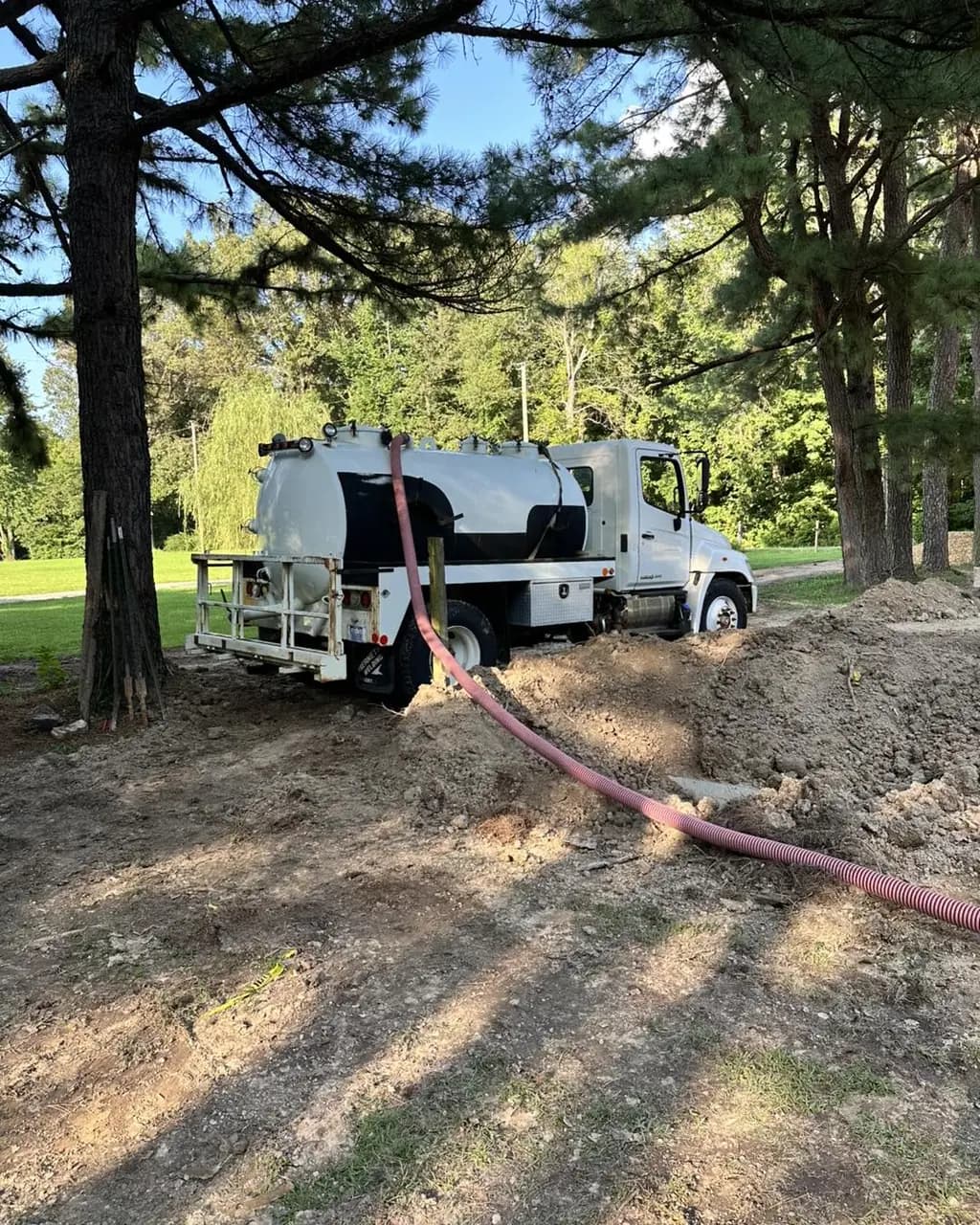

Lift station repair from Wurth Brothers starts from $299, and that covers maintenance, repair and emergency pumping for commercial and municipal sites across Western Kentucky. We answer the phone 24/7, and our on-call response is typically 1-2 hours across Paducah, Murray and Mayfield.
If you run a plant, a subdivision, a school, a car wash or a city site in Mayfield or Murray, a lift station is easy to forget until the alarm goes off. Here is what usually goes wrong and what we do about it.
What a lift station does
Sewage normally runs downhill to the sewer main or the septic system. When a building sits lower than where the waste needs to go, gravity can't do the job. A lift station fills that gap.
It is a pit in the ground, called a wet well, with one or more pumps inside. Floats sit in the well and tell the pumps when to start and stop. A control panel nearby runs the pumps and sounds an alarm when the level gets too high. When it works, nobody thinks about it. When it stops, sewage has nowhere to go but back up.
The usual reasons a lift station stops working
Lift station trouble usually comes down to a short list of problems:
- A stuck or tangled float. If the float can't move, the pump never gets the signal to start. The well fills and the alarm sounds.
- A clogged pump. Wipes, rags, grease and other things that should never go down a drain wrap around the pump and stop it from moving water.
- Grease build-up. Kitchens and food plants send grease into the line. It floats to the top of the wet well, hardens and coats the floats and the walls.
- A control panel or power fault. A tripped breaker, a bad switch or a failed alarm can shut the whole station down even when the pumps are fine.
- A worn-out pump. Pumps don't last forever. Sometimes a pump can be repaired, and sometimes the honest answer is that it needs replacing.
What happens on a lift station repair call
When you call us for lift station repair, we start by finding out what the alarm or the backup is telling us. Lift station pumping is part of what we do, from $299, so you aren't waiting on a second company to show up with a truck.
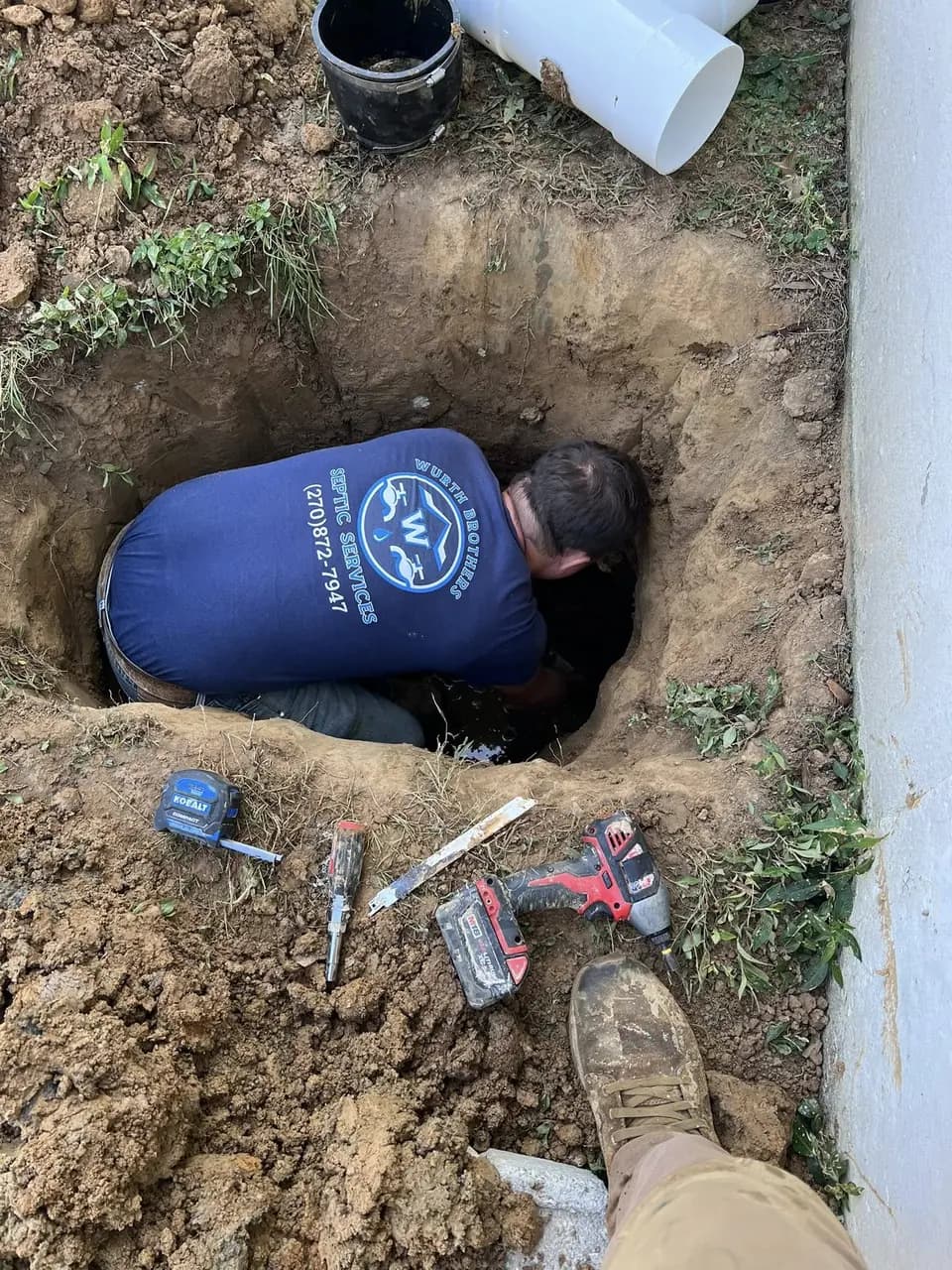
Then we look at the floats, the pumps and the panel, and we tell you what we found in plain words. If a float is stuck or a pump is clogged with rags, we clear it and get the station running again. If a part has failed, we explain the options and the price before any work starts.
Repairs come with a warranty that covers parts and labor. The terms vary by the type of repair, and we explain them before we start. You can read more about how we handle these jobs on our lift station services page.
Why 24/7 matters for a lift station
A lift station alarm doesn't wait for Monday morning. If the pumps stop on a Friday night, the well keeps filling as long as people keep using water. That's why we keep a crew on call around the clock.
Our customers on the home side have seen the same thing. One of our reviews puts it simply:
"Called Lucas Sunday night, he was at the house Monday morning to fix our issue. Personable and prompt." (Misty Gwaltney)
Another customer, Sarah, wrote: "Called them on a Saturday for a full septic tank and they got me in that very same day."
When you call, you talk to the owners directly, not a call center. Lucas Landis founded Wurth Brothers in 2020 after 5 years in the U.S. Army, and we are a veteran- and family-owned company that is licensed and insured. If your site is backing up right now, our 24/7 emergency septic service is the fastest way to reach us.
Repair now, maintain after
The cheapest lift station repair is the one that gets caught early. A float coated in grease or a pump starting to wear out usually gives some warning before it fails. Regular pumping and checks let us spot those problems while they are still small.
We wrote a separate guide on lift station maintenance in Western Kentucky that covers what a regular service visit looks like. If you are in Graves County, our Mayfield page covers the other work we do there, and our Murray page covers Calloway County.
Questions people ask
What happens if a lift station fails?
If a lift station fails, the wet well keeps filling and the sewage has nowhere to go. The alarm should sound first. If nobody responds, the sewage can back up into the building or overflow at the station. Calling as soon as the alarm sounds gives us the best chance to pump it down before that happens.
How can you tell if a lift station is working?
You can tell a lift station is working when the alarm is quiet, drains run normally, and the pumps start and stop on their own. A high-level alarm, a pump that runs without stopping, or a pump that never seems to run are all reasons to call.
What are common problems with lift stations?
Stuck floats, pumps clogged with wipes and rags, grease build-up, and control panel or power faults are the common ones. Worn pumps are another, and those sometimes need replacing rather than repair.
How much does it cost to replace a lift station?
It depends on the station, the pumps and the site, so we don't publish a single price. Lift station services start from $299. For bigger jobs, we look at the station first and give you a free estimate with the price spelled out.
Get a free quote
If your lift station alarm is going off, or you want a crew to look at a station that has been acting up, call us at (270) 872-7947. You'll speak to the owners directly. Or get a free quote online and we'll get back to you.