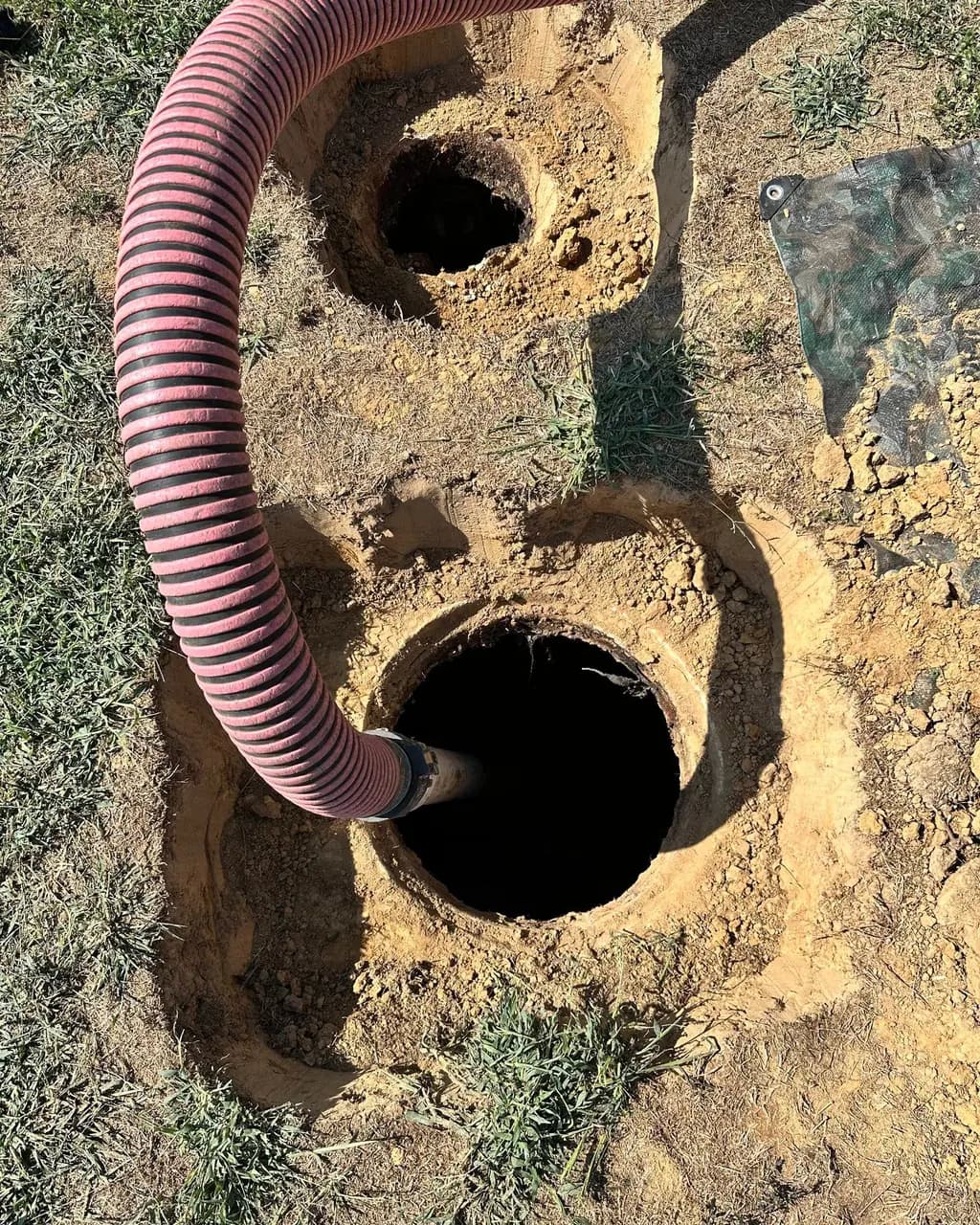

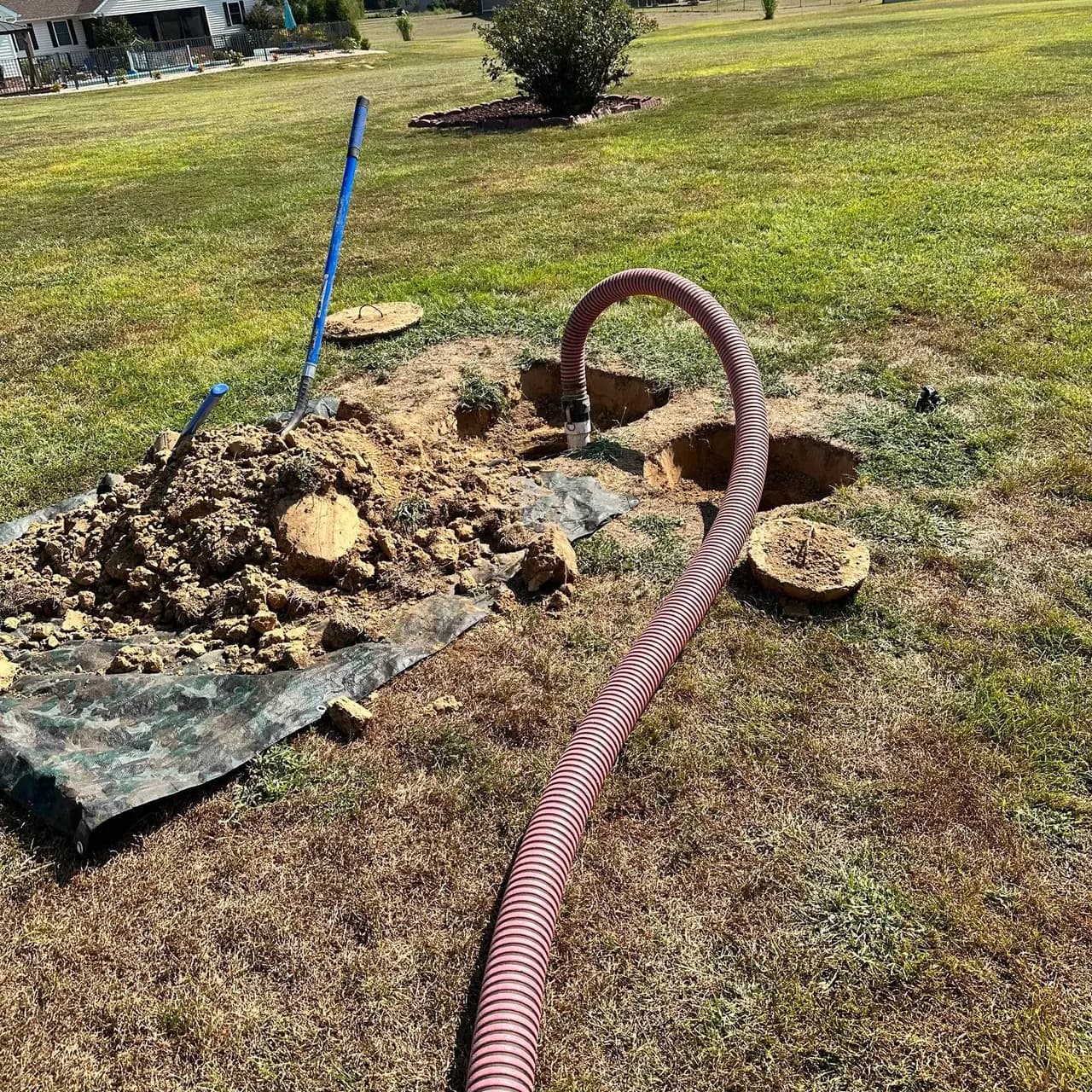
Septic tank locating means finding a buried tank when nobody knows where it is. You can often find the lid yourself with a few simple checks, and if that fails, we offer septic tank locating from $150 across Western Kentucky. If we fit a riser (from $220) while the tank is open, the lid ends up at ground level. Your next pump-out then starts without anyone digging.
Why You Need to Know Where Your Tank Is
Every pump-out, inspection and repair starts at the tank lid. If no one can find it, the crew has to search first. That adds time to the job. It can also mean digging up part of your yard.
Plenty of homes in the Jackson Purchase change hands with no map of the septic system. Grass grows over the lid, and nobody remembers where it was until the drains slow down.
If you want to know what sits under that lid, our guide on how a septic system works explains the tank and the field lines (the buried pipes that soak treated water into the yard).
How to Find Your Septic Tank Lid Yourself
Try these general tips first.
Check the County Records
Your county health department may have a permit or a drawing from when the system went in. Call the office for your county, such as McCracken, Graves or Marshall. Ask if they have a septic permit on file for your address. A drawing can show roughly where the tank sits from the house.
Look Through Your Home Papers
Dig out the paperwork from when you bought the house. A home inspection or septic inspection report may note where the tank is. You can also ask the past owner, a longtime neighbor, or the builder.
Follow the Main Sewer Line
All the drains in your house join one main pipe. Find where it leaves the house. Look in the crawlspace or basement, or for a cleanout pipe near the foundation. The tank is usually out in the yard in the same direction that pipe runs. Walk that line slowly and watch the ground.
Read the Yard
The ground over a tank can look a little different from the rest of the lawn. Look for:
- A patch where the grass is greener, thinner or grows faster
- A low spot or a small mound
- A spot where frost or snow melts first
- A concrete or plastic lid poking up near the surface
Probe With Care
Some homeowners push a thin metal rod gently into the soil to feel for the hard top of the tank. Go slowly and never force it. Before you dig at all, call your local "call before you dig" line so buried gas, power and water lines get marked.
Don't open the lid yourself. Septic tanks hold harmful gases, and an open tank is a falling hazard for kids and pets.
When to Call Us for Septic Tank Locating
If the records are missing and the yard gives no clues, call us. Septic tank locating starts from $150.
Once the tank is found, write down where it sits. Measure from fixed points, such as a corner of the house. Keep that note with your house papers so the next owner has it too.
Locating often goes hand in hand with other work:
- Pumping. Septic tank pumping starts from $449. If the tank can't be found, it has to be located first.
- Inspections. Buying a home? Our septic system inspections start from $449 and come with a written report.
- Effluent filter. This is a screen at the tank outlet that catches solids before they reach the field lines. Cleaning or replacement starts from $99.
Why a Riser Saves You Digging Next Time
A riser is a short tube that runs from the tank opening up to the surface. A lid sits on top at ground level. Riser and lid installation starts from $220.
With a riser in place, you don't have to find the tank again. You don't have to dig to open it. The next pump-out, inspection or filter check starts at a lid in the grass.
So if the tank is being found and uncovered anyway, that's the time to add a riser. You pay to find the tank once, not every time it needs service.
Backed Up and Can't Find the Tank?
If sewage is backing up into the house, don't keep searching on your own. We offer 24/7 emergency septic service with on-call response typically in 1-2 hours across Paducah, Murray and Mayfield.
Jennifer Hillis wrote after her pump-out:
"The technician was very knowledgeable about the process and answering all of my questions as he was doing the job."
Common Questions About Septic Tank Locating
How much does it cost to locate a septic tank?
With us, septic tank locating starts from $150. Adding a riser and lid starts from $220. Call and we'll tell you what your job needs.
What is the easiest way to locate a septic tank?
Start with paperwork. Check county health department records and any home inspection report. Then follow the main sewer line out from the house and look for changes in the grass. If none of that works, call us.
How far down is a septic tank usually buried?
It depends on the yard and how the system was put in. Some lids sit just under the grass. Others are much deeper. The only sure way to know is to find it. A riser takes the guesswork out for good.
What happens if you don't know where your septic tank is located?
It's easy to fall behind on pumping when you can't find the tank. Solids keep building up, and they can end up in your field lines. When something does go wrong, the search adds time to an urgent job.
Talk to the Owner Directly
Wurth Brothers is a veteran-owned septic company founded in 2020. We're licensed and insured, with 500+ customers served across Western Kentucky. When you call, you speak to the owner directly. See the towns we cover on our service areas page.
Can't find your tank? Call (270) 872-7947 or get a free quote.