
Tree roots in a sewer line don't go away when the drain starts flowing again. A quick clear punches a hole through the root mass, but the roots are still in the pipe, and they grow back into the same joint or crack. To stop the cycle, the roots have to be cut out of the pipe wall, and any broken section of pipe has to be fixed.
That's the job we do across Western Kentucky. We hydro jet roots out of the line (from $199), clean the full line (sewer line cleaning from $249), and spot-repair pipe that roots have broken (sewer repair from $249). Here's how to tell if roots are your problem, and how to decide which fix you need.
How roots get into a sewer line
Your sewer line is the pipe that carries everything from the house to the city main or, on a septic home, out to the tank. Water and nutrients move through that pipe every day. If there's a gap anywhere along it, a loose joint, a hairline crack, a pipe that's settled, roots find it.
A fine root slips in through the gap. Inside the pipe it has water and food, so it grows fast. Over time it turns into a mat that catches toilet paper, grease and solids. The line slows down, then it stops.
Older pipe is more likely to have the joints and cracks roots need. So are lines with big trees or shrubs growing near them. Out here in the Jackson Purchase, plenty of homes sit on lots with mature trees close to the house, and the line runs right under them.
Signs you have roots in your sewer line
Roots build up slowly, so the early signs are easy to brush off. Watch for:
- The same clog keeps coming back. You clear it, it runs fine for a few weeks or months, then it's slow again. That pattern points to something still in the pipe.
- More than one drain is slow. One slow sink is usually that sink. Slow drains all over the house point to the main line.
- Gurgling. A toilet that bubbles when the washer drains or the shower runs means water is fighting to get past something.
- Backups in the lowest drain. A floor drain or a downstairs tub is often the first place sewage shows up.
- A wet or extra-green strip in the yard. If a pipe is cracked, water can leak out along the line and feed the grass above it.
- Sewage smell inside or outside. A broken pipe can let gas out where it shouldn't be.
On a septic home, the same signs can also come from a full tank or a problem in the field lines (the buried pipes that soak treated water into the yard). That's why we look at the whole system, not just one part.
Why the quick clear doesn't last
A snake or auger is a fair first step for a simple clog. It drills a path through the blockage and gets water moving. For roots, though, it leaves most of the root mass stuck to the pipe wall. The roots that are left keep growing, and the clog comes back.
We see this pattern a lot. Someone has had the line cleared two or three times, and each time it holds a little less. That's not bad luck. It's roots that were never fully removed.
Our basic drain cleaning starts from $149, and it's the right call for plenty of ordinary clogs. When the problem is roots, we'll tell you so, and tell you why a clear alone probably won't hold.
How we clear roots: hydro jetting
Hydro jetting sends high-pressure water down the line through a hose with a jetting head. The water cuts through roots and scours the pipe wall, so roots, grease and sludge get flushed out instead of left behind. Our hydro jetting starts from $199. You can read more on our hydro jetting services page.
For a line that's packed with roots along a longer run, we may do a full sewer line cleaning, which starts from $249. Either way, the goal is the same: a clean pipe wall, not just a hole through the middle.
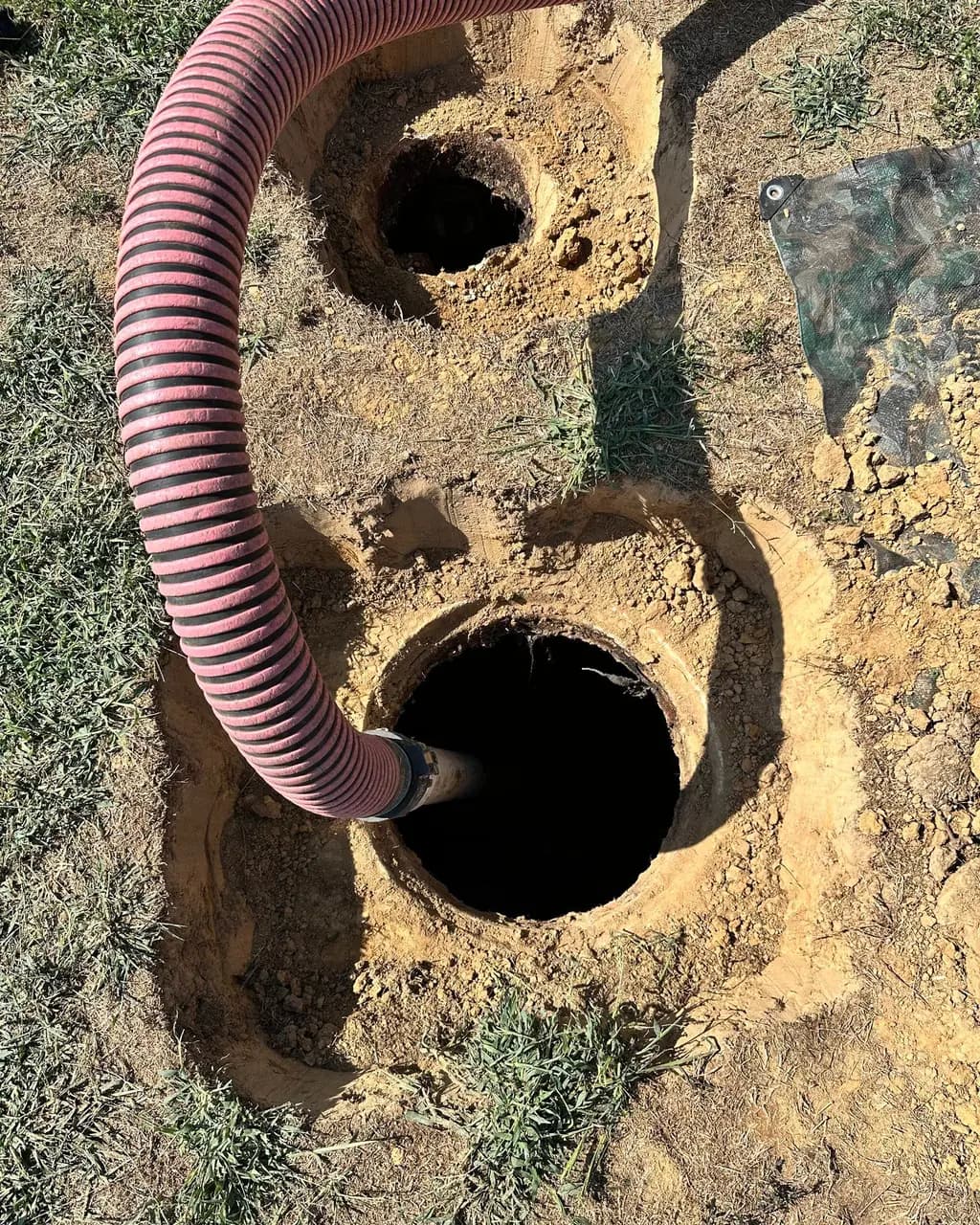
Jetting is also how we handle lines that are still stopped after other work. In September 2026, a customer named Todd had his septic tank pumped, but the line was still stopped up. We came back and hydro jetted the line to get it flowing clear. A pumped tank or a snaked drain doesn't always mean the line is clean. We wrote more about that in septic tank pumped but still backing up.
When the pipe itself is broken: spot repair
Clearing the roots fixes the clog. It doesn't fix the crack or the gap that let them in. If the pipe is broken, roots will find their way back in.
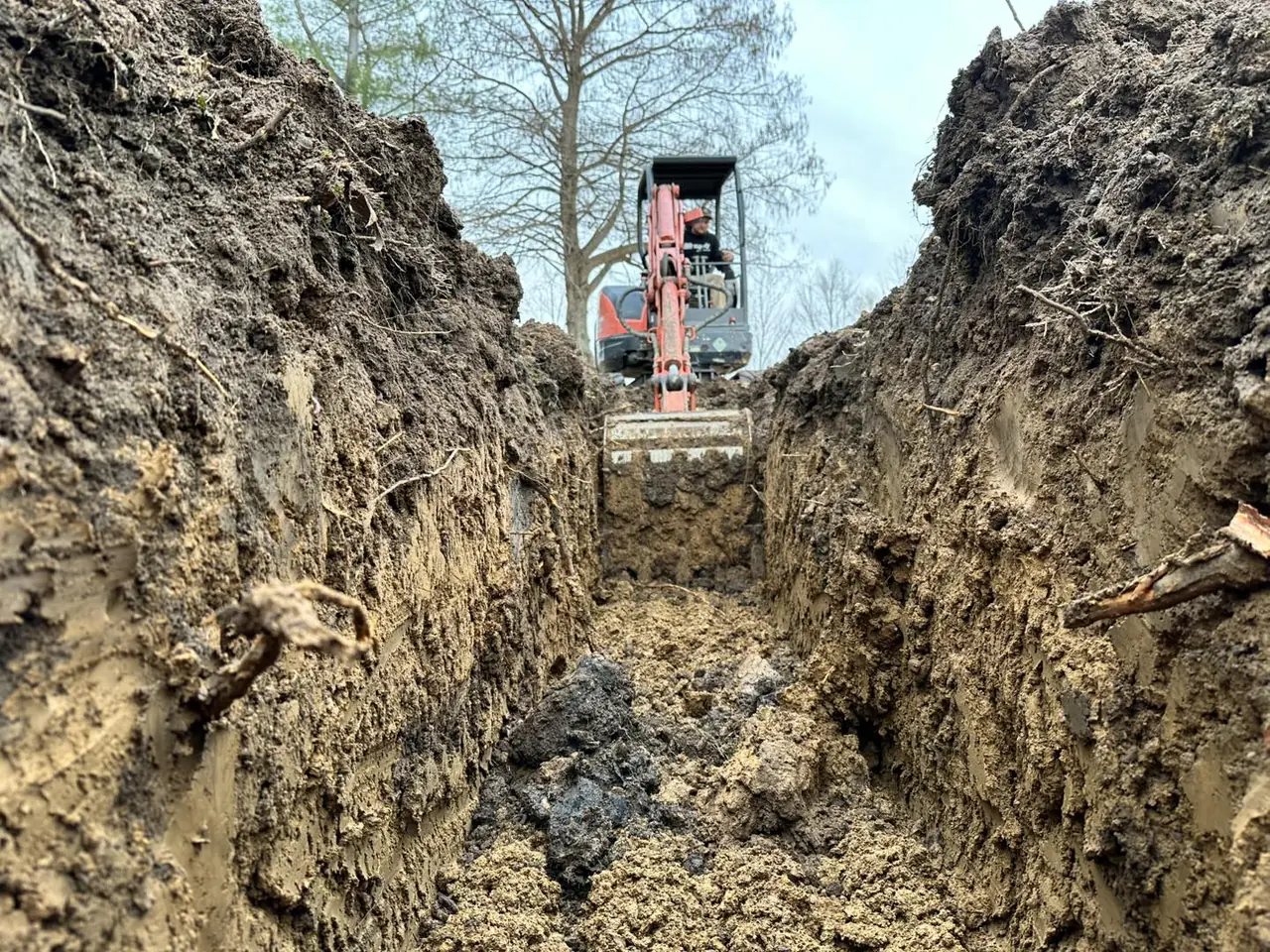
That's when we talk about repair. We do spot repairs on broken or root-intruded lines, starting from $249. A spot repair means we dig down to the damaged section and replace just that piece of pipe, not the whole run. For many homes, that's enough to close the door on the roots.
If the line is in bad shape along most of its length, a spot repair won't hold, and we'll say so. In that case we can run new line. New runs are priced after we've looked at the line, so we don't quote a number until we know what's down there.
Repairs come with a warranty covering parts and labor. Terms vary by repair type, and we explain them before work starts.
What we do on a root call
Here's how a typical visit goes:
- We ask what's been happening. How often it clogs, which drains are slow, whether it's been cleared before, and where the trees are.
- We open the line and get it flowing. If you're backed up, that comes first.
- We clear the roots out. Usually that's hydro jetting, so the roots come off the pipe wall.
- We tell you what we found. If the line looks sound after cleaning, you may be set for now. If roots came back fast or the line shows signs of damage, we'll talk through repair.
- We give you the price before we do more work. No surprise charges added at the end.
Tina left us this review: "Absolutely professional in all interactions. Fully transparent about price, expectations, next steps."
Roots on a septic system
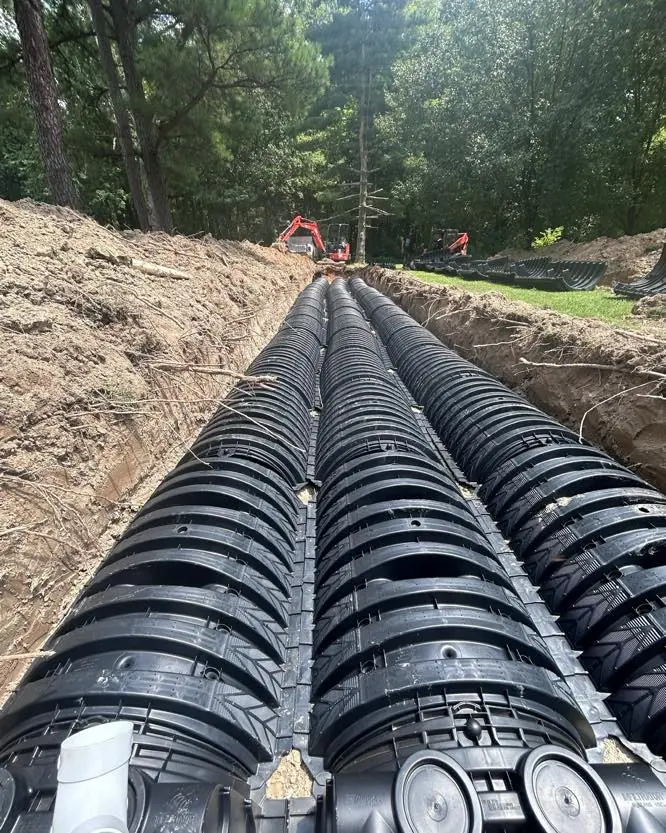
On a septic home, the line from the house to the tank is the most common spot for roots. But roots can also get into the line from the tank to the field lines, or into the field lines themselves.
If roots reach the field lines, the water has a harder time soaking into the soil. You may see wet spots or smell sewage in the yard. That's a bigger job than a clogged house line. Our septic system repair starts from $249 and covers diagnostics and fixes for tanks, lines and drain fields. If the field is too far gone, we'll be honest that repair isn't enough. Drain field replacement is quoted after a site visit.
When it's an emergency
A slow drain can wait for a weekday. Sewage coming up in a tub or a floor drain can't.
If you're backed up, stop running water: no laundry, no dishwasher, no showers. Every gallon you send down has nowhere to go. Then call us. We answer 24/7, and our emergency septic service starts from $199, with on-call response typically 1-2 hours across Paducah, Murray and Mayfield.
Judy had a septic problem over a weekend. In her words: "called Lucas on Sunday. He responded very quickly and the problem was taken care of Monday."
Questions people ask
What are the signs that tree roots are damaging my sewer line?
The biggest one is a clog that keeps coming back in the same line after it's been cleared. Others are slow drains all over the house, gurgling toilets, backups in the lowest drain, sewage smells, and a wet or extra-green strip of grass over where the line runs.
Can I get rid of tree roots in a sewer line for good?
Clearing roots with hydro jetting removes what's in the pipe now. To keep them out, the gap they came in through has to be fixed. If the pipe is cracked or a joint has opened up, a spot repair on that section is what stops the roots coming back.
How much does it cost to remove tree roots from a sewer line?
With us, hydro jetting starts from $199 and sewer line cleaning starts from $249. If the pipe is broken, sewer repair starts from $249. A full new run is quoted after we look at the line.
Get roots out of your line
If your drains keep slowing down no matter how many times they're cleared, roots are a likely cause. We serve homes and businesses across McCracken, Graves, Marshall and the rest of the Jackson Purchase. See every town on our service areas page.
When you call, you talk to the owners directly, not a call center. Call (270) 872-7947, or get a free quote online.